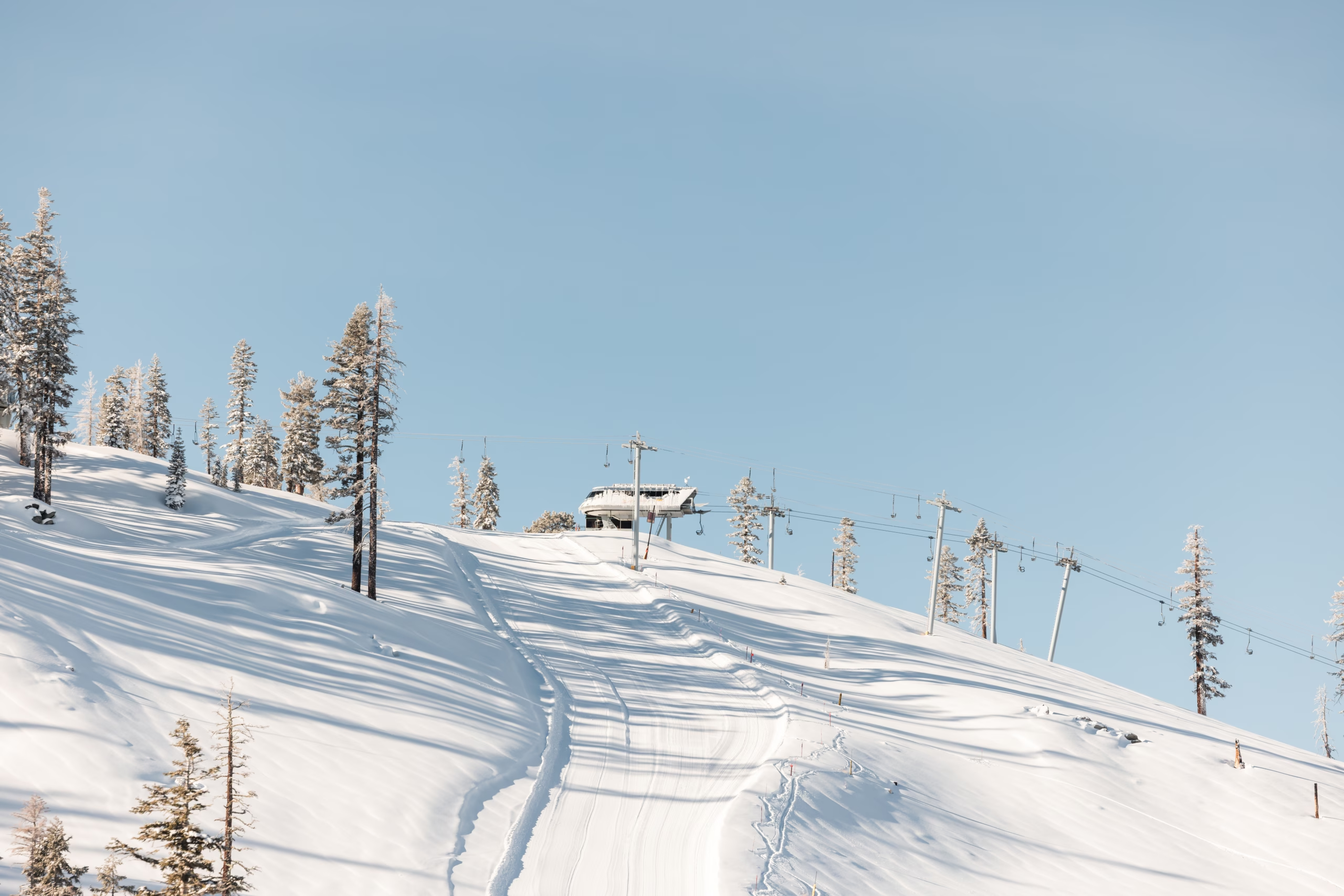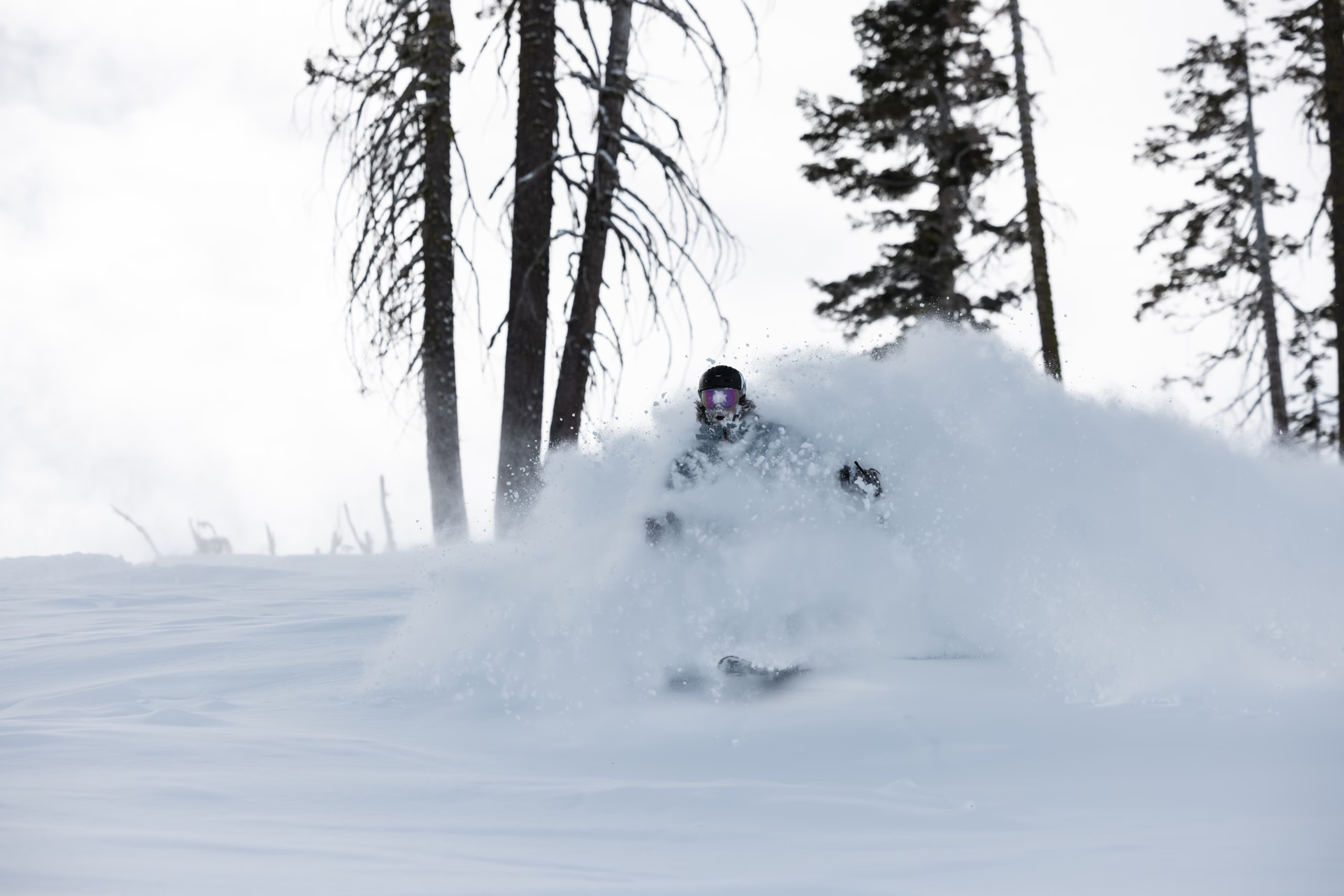


New growth and new glades are starting to take shape at Sierra-at-Tahoe as the forest makes its comeback from the Caldor Fire with the US Forest Service planting 16,000 seedlings in West Bowl last week.

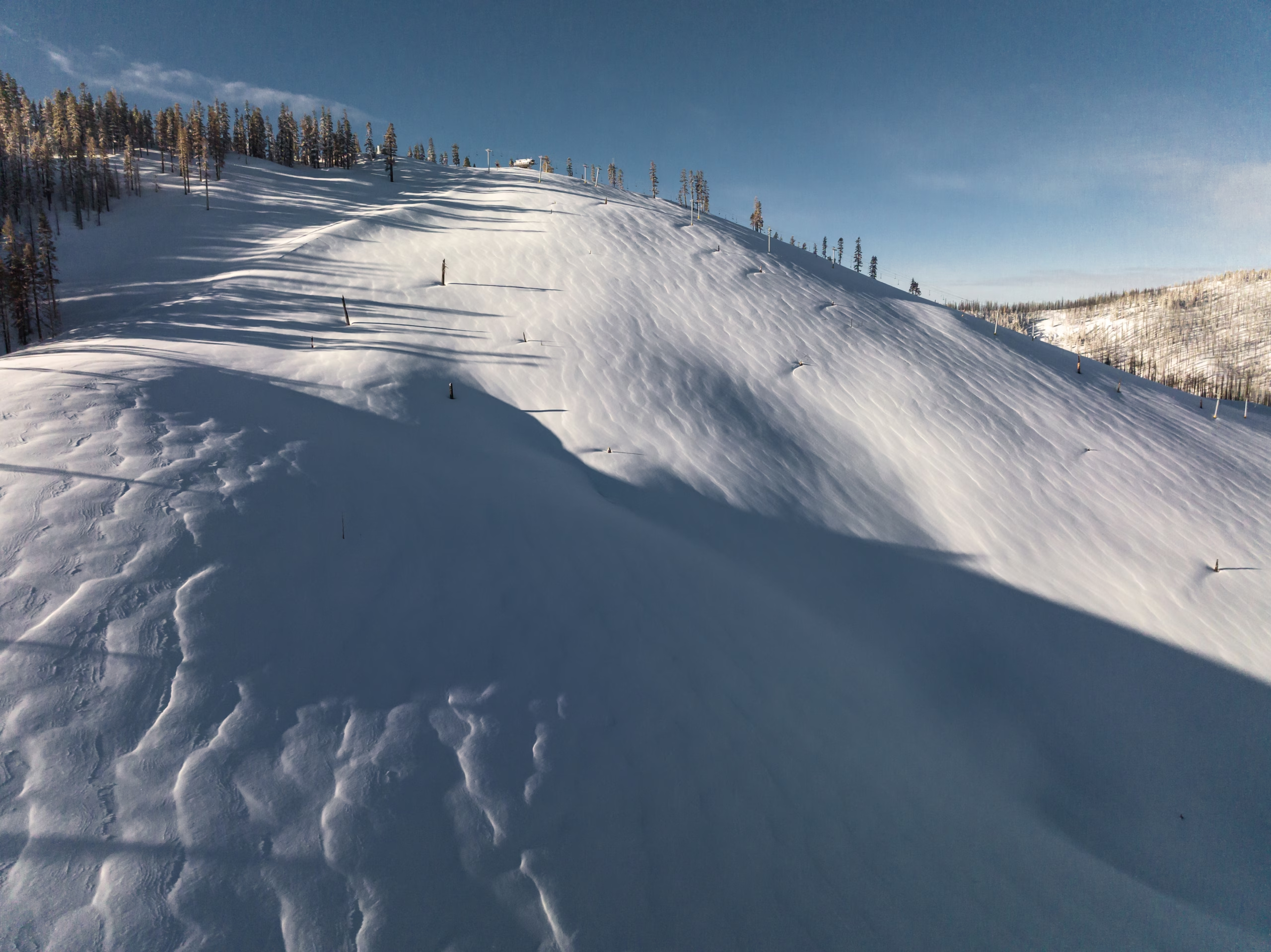
A New Dawn
In the wake of the 2021 Caldor Fire, a new story is taking root here at Sierra-at-Tahoe—one of regeneration, reimagination and renewal. Last week in partnership with the US Forest Service and El Dorado RCD, more than 16,000 seedlings were planted in West Bowl as part of ongoing recovery efforts — with the forest already showing promising signs of re-growth.
“From what we’ve seen so far, the forest is showing strong signs of regeneration which is great to see. This next phase is about intentional planting both in terms of location and the species of conifers we reintroduce.”
Jesse Cone, Silviculturalist with the Placerville Ranger District of the El Dorado National Forest.
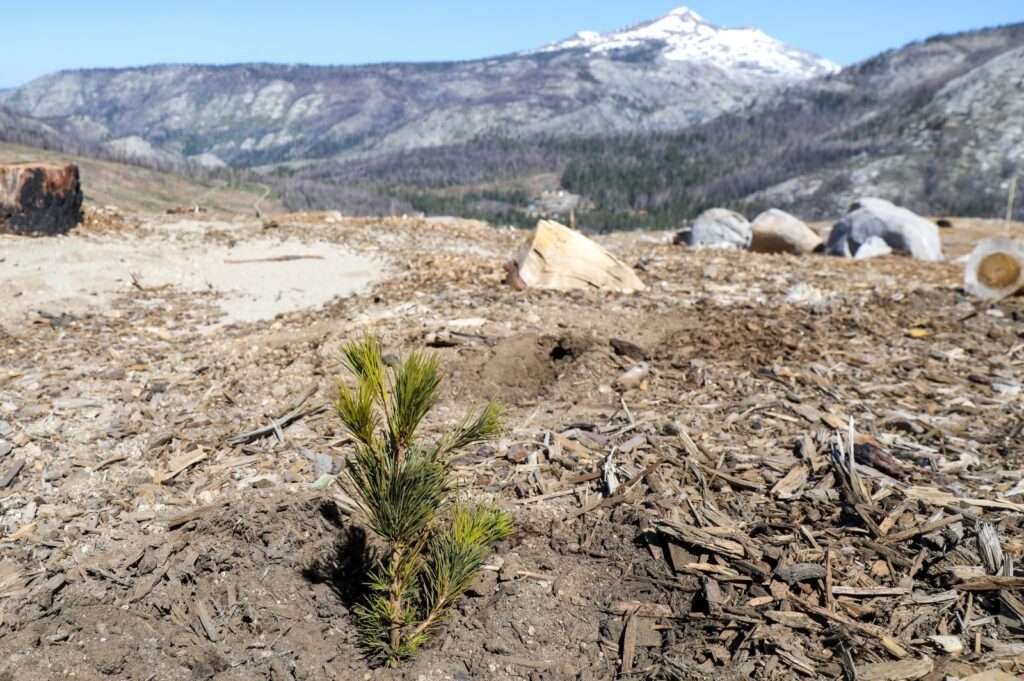
Photo: Jeffery Pine seedling in West Bowl | Credit: Sierra-at-Tahoe
The variety of trees being planted includes a mix of Red Fir and Jeffrey Pine, with smaller numbers of White Fir, Western White Pine and Sugar Pine selected for their viability, compatibility and the greatest chance of long-term success.
For us this isn’t just about replacing trees—it’s about embracing a rare opportunity to quite literally reimagine and reshape Sierra’s terrain, where nature and adventure grow side by side—and we think that’s pretty cool 😊
Tree Skiing, Reimagined
As thousands of trees begin to take root in West Bowl, skiers and riders can look forward to an entirely new experience taking shape under their boots and boards.
“A key to great off-piste (glade) skiing is tree spacing . Forests naturally grow in clusters and patches, not perfect grids, so we’re planting the trees in a way to mimic the unique natural feel, look and flow you would expect to find at a ski resort. This is just the beginning of a multi-year recovery and each phase brings new energy and excitement to the mountain.”
Mark Egbert, district manager of the El Dorado and Georgetown Divide Resource Conservation Districts.
Planting techniques will vary depending on terrain and location .
In some areas, a uniform planting strategy will be used—trees will be densely and evenly spaced to help act as natural trail markers, provide shelter from winds, improve visibility on storm days and help prevent cornice formation.
Other areas will use cluster planting , where trees are grouped irregularly with open space between them. This approach mirrors the natural patchwork of a healthy forest and will help restore some of the incredible tree skiing and riding Sierra has long been known for as it’s perfect for creating flowy glades, playful lines , and snow-filled pockets worth chasing on a powder day.

Image: Diagram of different planting techniques.
Left: Cluster planting | Right: Uniform planting | Credit: US Forest Service
The USFS is taking a thoughtful approach to planting—not just to grow a healthy forest, but to bring back terrain that’s fun to ride and in Sierra spirit, full of character.
Whether you’re chasing tight turns between trees or exploring untouched pillowy stashes on a powder day, our reborn forest will offer a new kind of flow.
Rebuilding a Resilient Forest
The forest you’ll be skiing through in years to come is already taking shape—thoughtfully planted, carefully protected and designed to deliver a new experience that’s as natural as it is exciting and unexpected.
This will be a multi-year project that spans generations, but the vision is already unfolding. Every visit, every turn, every season helps write the next chapter of this mountain’s story, and we’re stoked to have you with us.
So whether you’re chasing untouched powder or simply taking in the views, know that you’re riding through something special. This isn’t just recovery, it’s renewal. And it’s just the beginning! ⛰️